The Hidden Cost of Your Second Brain
Maintenance fatigue and the illusion of organisation
Part 2 of the series: Building Linubra

There is a particular kind of person who has a beautiful Notion workspace.
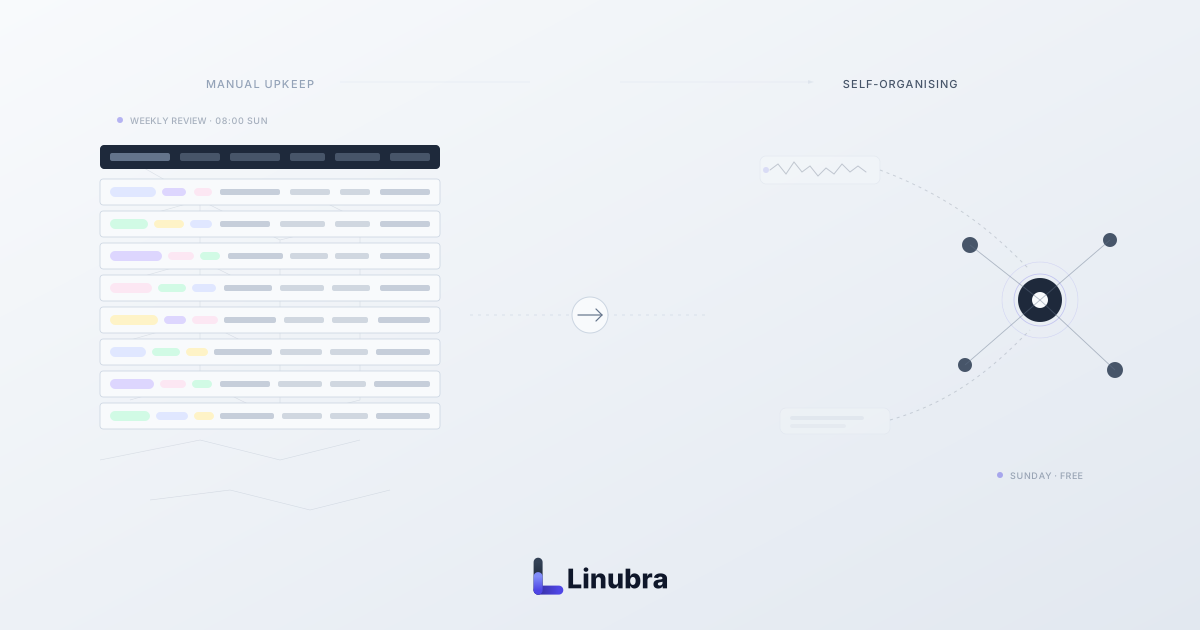
Their database has seventeen properties. Their tags are colour-coded. Their weekly review template fires every Sunday at 08:00. Their linked databases cascade neatly across Projects, Areas, Resources, and Archive. They’ve spent, conservatively, four hundred hours building this system over the last two years.
They are not more productive than they were before Notion. They’re just more organised about being unproductive.
This isn’t a criticism of the person. It’s a criticism of the idea they were sold.
The Maintenance Tax
Every note-taking system carries a hidden cost. I’m going to call it the maintenance tax because every critique of it I’ve seen uses that word.
A raw note is nearly worthless in isolation. To be useful later, it has to be filed, tagged, linked to related notes, placed inside the right project, reviewed periodically, and updated when something changes. None of this work is the actual work. It’s overhead. Meta-work. The maintenance of the factory floor, not the goods it produces.
The promise of the second-brain movement was that the overhead pays dividends later, when you need to retrieve something. In theory, that’s correct. A well-maintained system does surface information faster than a pile of unsorted notes. The problem is the accounting.
Spend five hours a week maintaining your system. That’s 250 hours a year. Over five years, 1,250 hours. For a normal working week that’s roughly thirty full weeks — more than half a year of focused work — spent not thinking, not creating, not deciding. Spent filing.
Most people never run this calculation. They feel productive because the act of organising feels like progress. A clean inbox, a freshly tagged database, a completed weekly review — real sensations, real dopamine, but they’re not outputs. You can’t ship them.
Manual Systems Always Degrade
The maintenance tax would be tolerable if it were a one-time investment. It isn’t.
Manual knowledge systems degrade the moment you stop feeding them. Miss two weeks of weekly reviews and the system is stale. Change jobs and the whole Area hierarchy needs restructuring. Have a child and your “Life” section becomes an archaeological site. Every major life transition needs a migration, a rebuild, a fresh start. Nothing about this gets easier with experience.
Nearly 70% of new software users stop using the software within three months (CMSWire, 2024). That number isn’t specific to knowledge management apps, but the shape of it is telling. The system doesn’t fail because people are lazy. It fails because the architecture demands work that humans are structurally bad at — consistent tagging, temporal cross-referencing across hundreds of entities, remembering to update a note from eighteen months ago because something changed today.
We’re good at pattern recognition, narrative reasoning, and contextual judgment. We’re bad at being an indexing engine. We’ve been using ourselves as a CPU for a job that should run as a background process.
The System Should Do the Maintenance
The premise is simple. The system should do the maintenance, not you.
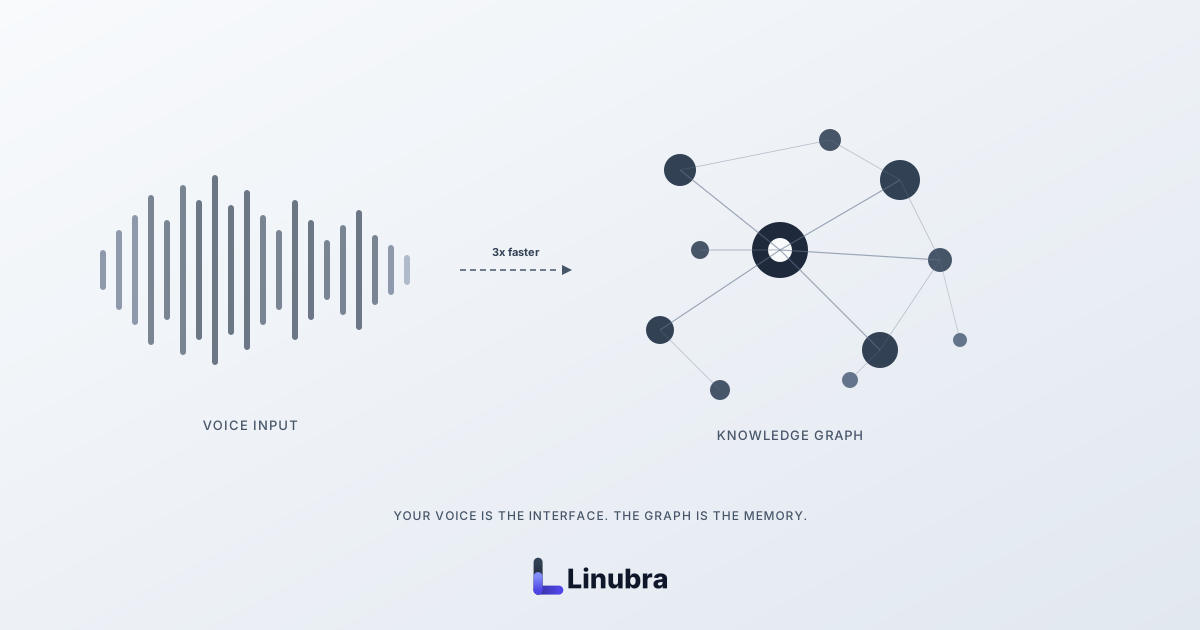
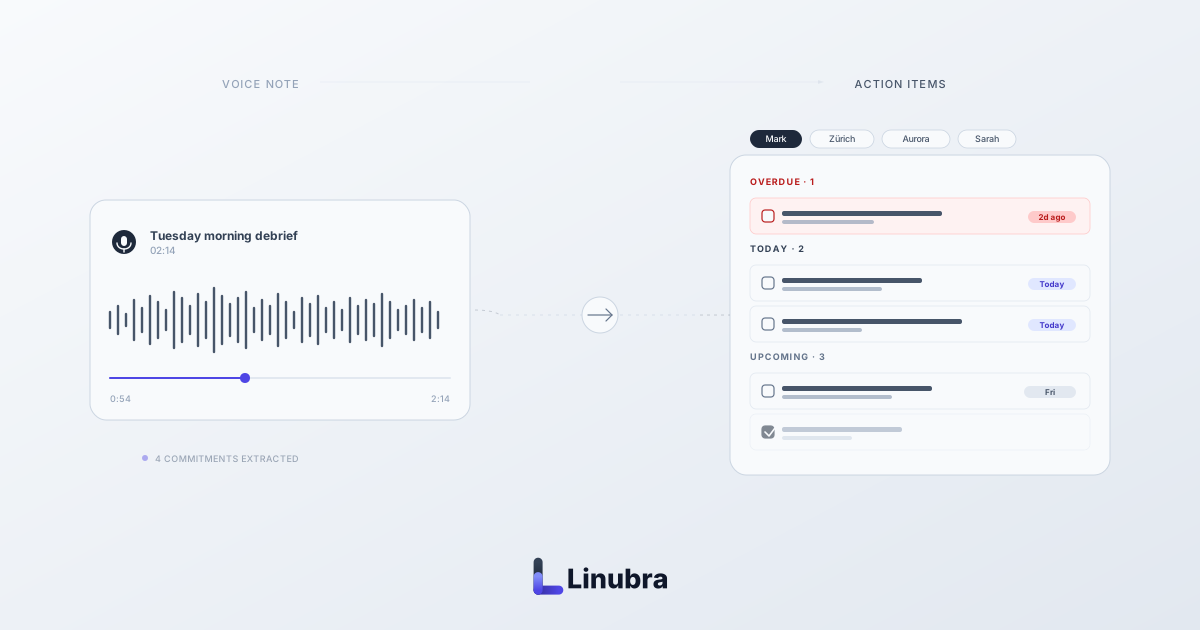
You capture a thought — voice, text, image — at the moment it happens. You don’t tag it. You don’t decide which database it belongs in. You don’t create a link to a related entry. You move on with your day.
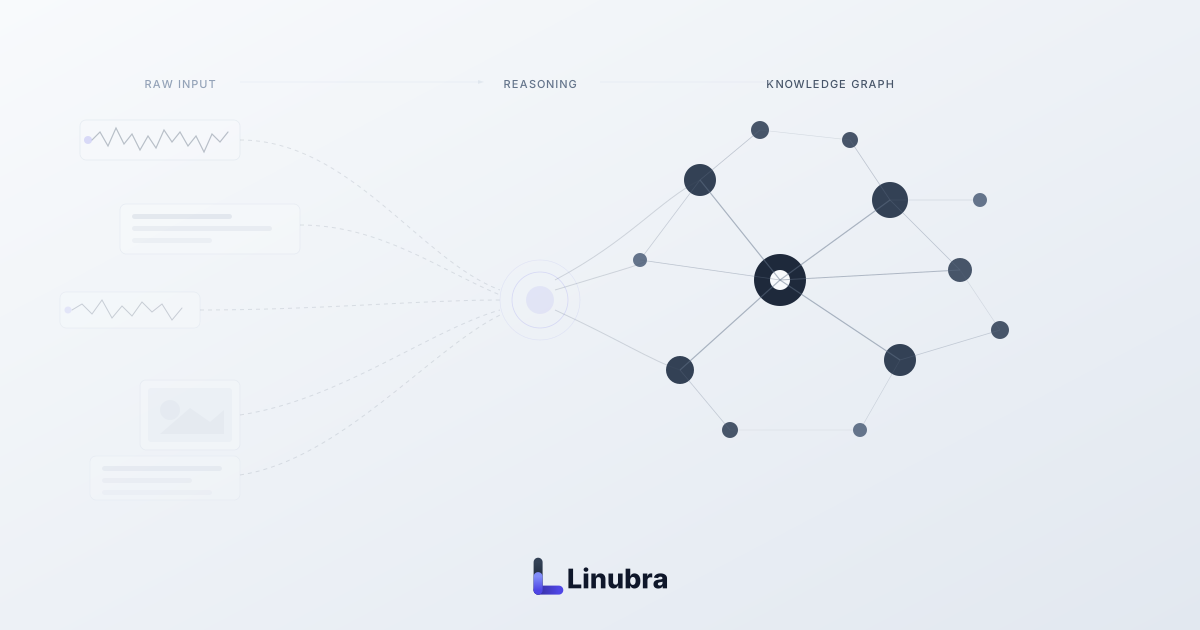
The engine processes the input in the background, extracts the entities (people, projects, locations, symptoms, decisions), builds the links between them, flags when a new claim contradicts something older, and surfaces the connections when you actually need them. The weekly review isn’t a feature we forgot to build. It’s a workflow we deliberately removed.
This isn’t a faster way to organise notes. It’s a different category of tool, built on the premise that the graph should construct itself from what you say, not from what you file.
The Honest Trade-Off
A system that processes your inputs automatically can’t also give you the granular control of a hand-crafted Notion setup. If you want seventeen custom properties on every entry, Linubra isn’t for you. If full ownership of the taxonomy is the point for you, the automated graph is going to feel frustrating. These are real trade-offs and I’m not going to pretend they aren’t.
But if what you actually want is to remember things — walk into a meeting fully briefed without having spent forty minutes the night before manually pulling notes together, catch the cross-domain pattern before it costs you anything, find the name you forgot without scrolling through a transcript archive — then the trade-off is easier than it looks. You give up granular control over the taxonomy. You get your Sundays back.
Your time costs more than the maintenance overhead you’ve normalised.
The Question That Started This
The productivity community has spent a decade asking how do I build a better second brain?
The more useful question is why am I maintaining my memory manually at all?
That question is what started this project. The answer turned into a system where the graph builds itself from raw experience, the data stays yours, and the patterns surface before you need them. Sunday mornings are free again.
If you are still evaluating the options, we have compared the leading AI second brain apps side by side — Linubra, Notion, Obsidian, Mem, and Reflect — in one place.