The Knee, the Board Meeting, and a Pattern
A data point that was never entered, a connection that was never made, and an injury nobody caught in time
Part 3 of the series: Building Linubra

This is a story about a data point that was never entered, a connection that was never made, and an injury that could have been seen coming three months out.
The person in the story is a composite. I’m calling him Marcus, and I want to say up front that he isn’t real. Every element is drawn from patterns I’ve seen in friends, founders, and my own training logs — but Marcus himself is a hypothetical. The point of telling it as a story instead of a list of studies is that the shape of the problem only becomes obvious when you watch it happen across a calendar.
March: The Board Meeting
Marcus runs a Series A company. Tuesday in March, he walks out of a board meeting feeling wrung out. The numbers held, but there were two hours of pointed questions about runway and a tense exchange over a hiring plan he hadn’t fully gamed out.
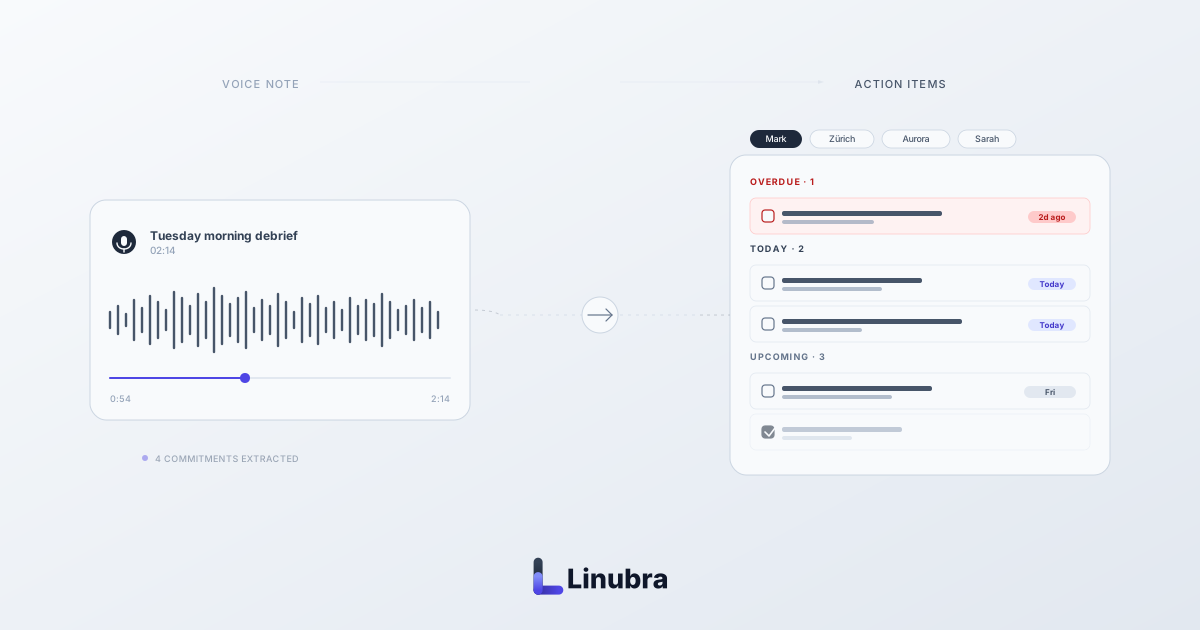
He gets in the car, voice-logs two minutes of debrief, and moves on. The note goes into his phone. He doesn’t tag it. He doesn’t file it. He will probably never look at it again.
That evening, he trains. 10km easy, heart rate steady, felt fine.
April: The Pattern Begins
Over the next six weeks, Marcus has three more difficult board interactions, two high-stakes investor calls, and a restructuring conversation with a co-founder. Each time, he voice-logs the debrief. Each time, the note drops into the pile.
During the same period, his left knee starts to feel slightly wrong on long runs. Not pain. Just a tightness. He mentions it to no one. He takes an extra rest day twice. He moves on.
His Garmin shows nothing out of the ordinary. HRV is slightly suppressed but still inside the normal band. He doesn’t connect the Garmin data to the tightness in his knee. Why would he? They live in different apps, in different mental buckets, in different weeks.
June: The Physiotherapist
By early June the tightness is pain. Marcus books a physiotherapist. She asks: when did this start? He thinks. Probably around March or April. He isn’t sure. Any pattern to when it gets worse? He has no idea.
She gives him a diagnosis — iliotibial band syndrome, classic overuse presentation — and a rehab programme. She asks about stress levels during training. He says: fine, I think. He genuinely doesn’t remember that the worst training weeks roughly corresponded to the hardest board weeks.
He recovers. It takes ten weeks. He loses his whole race season.
The Version Where He Uses Linubra
Run the same six months with a reasoning memory engine attached.
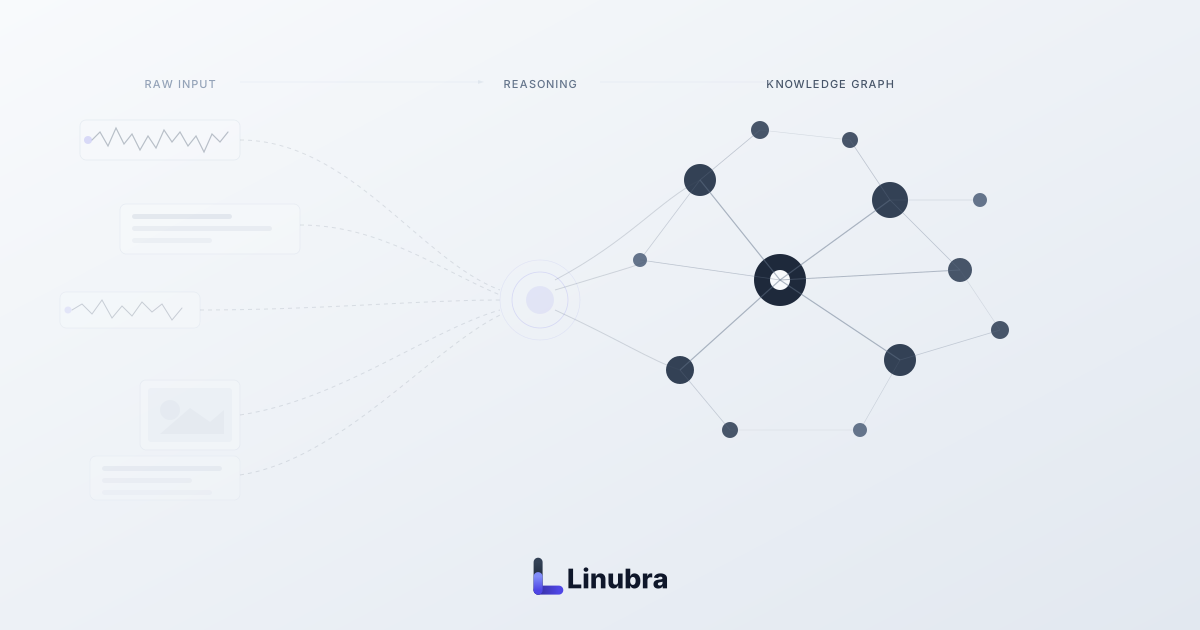
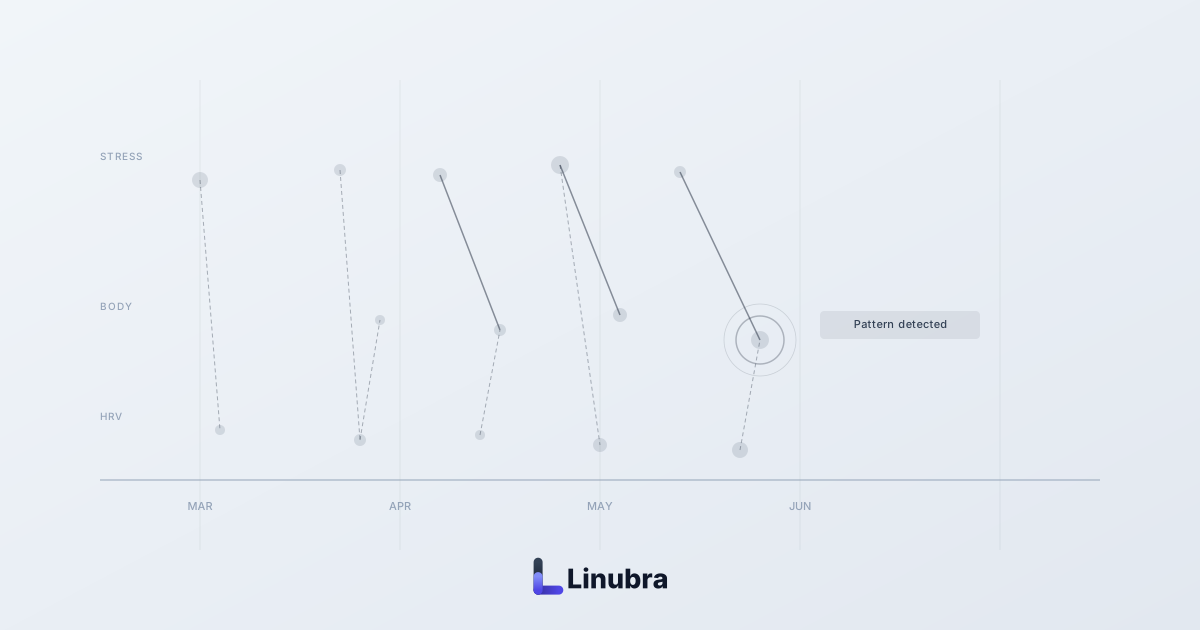
Every voice log Marcus makes after a difficult meeting gets extracted, linked to a “board meeting” entity, and tagged with the emotional shape he used to describe it. His wearable pulls in HRV and training load on the quantitative side. One graph, two streams — the qualitative thing he said out loud, and the quantitative thing his body did about it.
A 2024 longitudinal study in Frontiers in Public Health showed that work stress, specifically effort-reward imbalance, significantly suppresses HRV across all five frequency-domain measures (Frontiers, 2024). The mechanism is well-understood in the literature. What’s missing in the real world isn’t the science. It’s a tool that has both sides of the data in the same place at the same time.
In late April, the system writes a line in Marcus’s morning briefing:
Three instances of HRV suppression greater than 12% have lined up with your three highest-volume training weeks. Similar pattern in October preceded the two-week knee interruption you logged then. Current load is 94% of your October peak.
He doesn’t need to be a sports scientist to read that. He takes a recovery week. He doesn’t get injured.
That’s the gap between a notes app and a reasoning memory engine. The notes app stored the data. The engine read it.
This Isn’t a Discipline Problem
If the obvious reaction to the Marcus story is “he should have been more careful”, the obvious reaction is wrong.
A 2024 review found that 75% of athletic injuries were associated with preseason anxiety or depressive symptoms, with a rate ratio of 2.3 for subsequent injury (PMC, 2024). The link between stress and physical injury is well-documented in sports science. It’s the cross-referencing that’s hard — not the science.
The human brain is built for narrative, not for cross-domain temporal correlation. We’re good at remembering stories. We are bad at tracking the relationship between a stress spike in Week 14 and a physical symptom in Week 17 across two separate data streams, especially when those streams live in different apps, different contexts, and different mental categories. You don’t fix this with better habits or a more rigorous journalling discipline. You fix it with a tool that does the tracking for you.
Where Else This Applies
The story is about sport and stress. The mechanism — qualitative context fused with quantitative data, surfaced as a pattern before the consequence arrives — isn’t limited to either.
The executive who logs one budget figure in a meeting and a different one six weeks later. The graph catches the contradiction before the next negotiation, not after it.
The parent who mentions a child’s allergic reaction in passing. The graph builds the health timeline in the background and has it ready when the paediatric appointment comes up a year later.
The engineer who fixes a CORS issue in a Docker configuration on one project. Eight months later, in a different project, a similar context comes up. The fix is already there.
In every case, the raw input was already being captured. The person was already talking, writing, logging. What was missing was the graph — the structure that connects the dots across time, context, and domain. That’s what a reasoning memory engine builds. Not out of your administrative effort, but out of the stuff you were already saying.
And because this kind of data is categorically more personal than text notes, where it lives matters as much as what it does. More on why that mattered enough to build something from scratch on the About page.